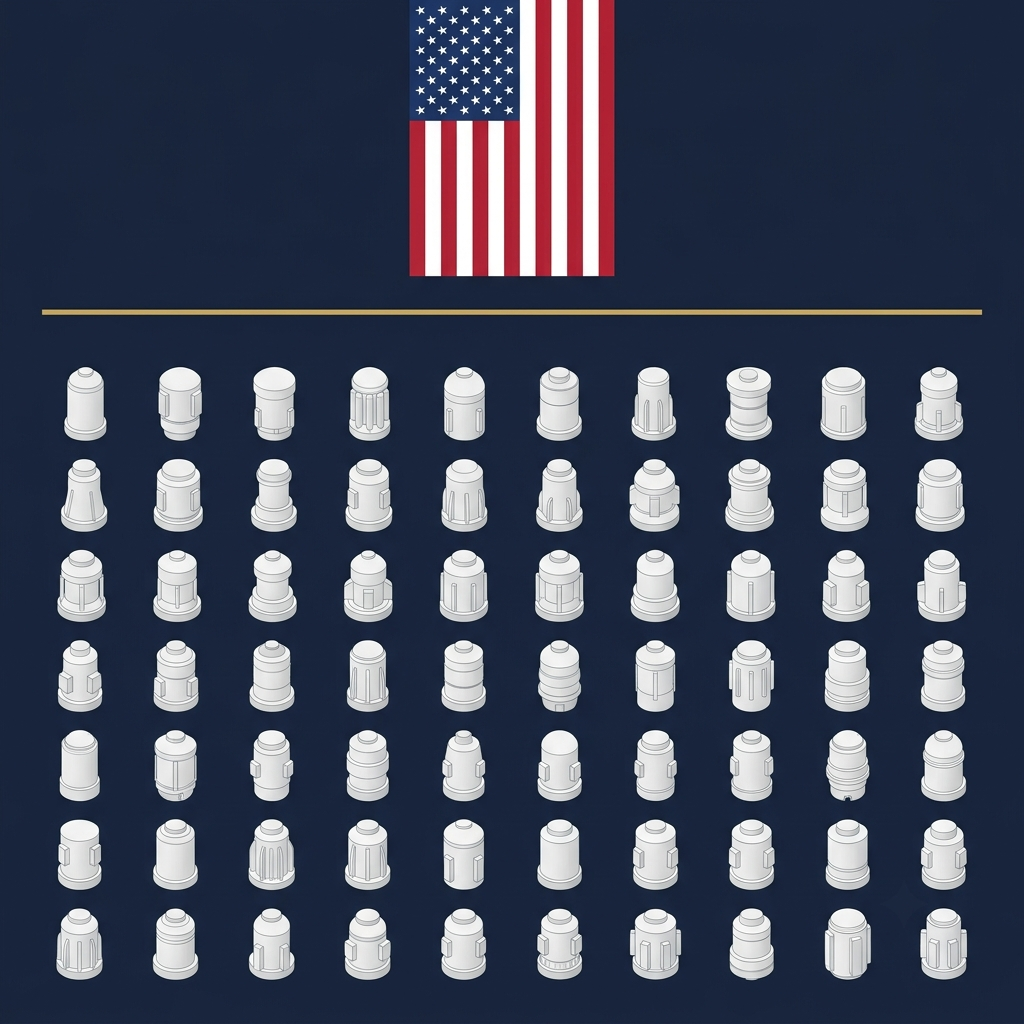
In April 2026, the US Energy Information Administration published a compilation of every commercial small modular reactor and microreactor design under development in the United States. The dataset covers specifications as of February 2026, organised by coolant type, and it is the most complete public inventory of the American design field.
It is worth reading carefully, because the structure of the list tells you more about where this market is than any single entry does.
Four Design Families, Plus One
The EIA groups the designs into four categories by coolant, with a fifth catch-all for vendors in pre-application whose designs do not fit the others.
Light water-cooled reactors. These are smaller versions of the large pressurised water reactors operating today. They use the hydrogen in water as a moderator, run on standard low-enriched uranium, and are designed to supply baseload electricity to a conventional grid. The category is the least technically novel and the most regulatory-familiar.
High-temperature gas reactors. Graphite moderator, helium coolant. Operating temperatures are high enough to serve industrial processes that need substantial heat input, including hydrogen production through thermochemical electrolysis. Some designs use HALEU. Others use TRISO particle fuel, a structure built to withstand temperatures beyond the limits of conventional nuclear fuel.
Molten salt reactors. Molten salts serve as fuel, coolant, or both. When they carry fuel, fissile material is dissolved directly into a fluoride or chloride salt. Like gas reactors, they operate at high temperature and can serve both electricity and industrial heat demand.
Sodium-cooled reactors. Liquid sodium replaces water as coolant. Higher temperatures, lower pressures, and greater fuel utilisation inside the vessel. The category includes both fast-spectrum designs and others.
Other designs. Vendors whose technology does not map cleanly onto the four families, all engaged in pre-application with the Nuclear Regulatory Commission.
The spread matters. Four coolant families, plus an unclassified group, means suppliers are being asked to fabricate components against specifications that do not resemble each other. Standardisation, which is the entire economic premise of the SMR sector, does not yet exist at the industry level. It exists, at best, within individual vendors.
The Federal Programmes
Three programmes now determine which developers receive an accelerated pathway.
The Energy Reactor Pilot Program, launched by the Department of Energy in June 2025, selected nine vendors: Aalo Atomics, Antares Nuclear, Deep Fission, Last Energy, Oklo, Natura Resources, Radiant Industries, Terrestrial Energy, and Valar Atomics. Applicants fund their own designs. In return they receive a fast-track licensing approach through the DOE authorisation process, intended to attract private capital alongside it.
Advanced Nuclear Power for Installations, run through the Defense Innovation Unit with the Army and Air Force, named eight eligible vendors in April 2025: Antares Nuclear, BWXT Advanced Technologies, General Atomics Electromagnetic Systems, Kairos Power, Oklo, Radiant Industries, Westinghouse Government Services, and X-Energy.
The Janus Program, announced by the Department of the Army in October 2025, builds on the earlier Project Pele transportable reactor effort. Nine Army installations have been selected as potential sites: Fort Benning, Fort Bragg, Fort Campbell, Fort Drum, Fort Hood, Fort Wainwright, Holston Army Ammunition Plant, Joint Base Lewis-McChord, and Redstone Arsenal.
Beyond these, the Air Force is planning its first microreactor at Eielson Air Force Base in Alaska, with Oklo selected as vendor. The unit is to be commercially owned and operated and aims to deliver between 1 and 5 megawatts by 2027. The Navy, which has operated advanced reactors in submarines and carriers since the 1950s, has issued its own solicitation for commercial on-site reactors at its installations.
What the Overlap Tells You
Three vendors appear on both the DOE pilot list and the military installations list: Oklo, Antares Nuclear, and Radiant Industries.
That overlap is the closest thing in the public record to a screening signal. Both programmes require a design mature enough to be assessed and a company stable enough to be selected. Appearing on both suggests a developer has cleared more than one evaluation.
It is not proof of commercial readiness. Neither list requires a signed customer or secured fuel. But it narrows the field in a sector where the field has been widening for years.
The Fuel Constraint
A substantial share of the gas-cooled and sodium-cooled designs run on HALEU, enriched between 5 and 20 percent uranium-235, or on TRISO fuel fabricated from it. Light water designs do not. They use standard low-enriched uranium, enriched below 5 percent, which is already produced at scale in the United States and its allies.
That difference has consequences. HALEU production in the West remains at demonstration scale. The DOE Fuel Line Pilot Program exists specifically to establish a domestic fuel supply chain for testing new reactors, using the same fast-track authorisation approach as the reactor pilot programme. It is a recognition that the fuel is not there yet.
Developers pursuing non-light-water designs therefore carry a fuel supply risk that light water developers do not. This does not make their technology inferior. It means their deployment timeline depends on a supply chain that is still being built, and that dependency should be priced accordingly.
What the Data Does Not Cover
The EIA compilation lists designs, vendors, and technical specifications. It does not list which developers have signed binding customers, secured fuel allocation, or reached a financeable position.
That gap is the one that matters commercially. A design can be complete, technically credible, and selected for a federal pilot programme while the company behind it has no revenue, no committed buyer, and no funded path to construction.
The distinction between a design existing and a project being financeable is the distinction that decides which of these vendors are still operating in 2030.
Why This Inventory Matters
The EIA has done something the sector rarely does: it published a neutral, government-compiled list of who is developing what, without a commercial interest in any of them.
Read together with the federal programme selections, it gives a clearer picture of the American field than most vendor material does. Thirty or more designs, grouped into four technical families, with a handful of developers appearing repeatedly in government programmes and the rest not appearing at all.
That is the landscape as of February 2026. It will look different by 2028, and the difference will be decided less by reactor physics than by which developers find customers, fuel, and capital in the meantime.
Our analysis of where each of these developers stands on customers, fuel, and deployment is in the MMR Market Intelligence Report 2027