Buried inside a routine NRC filing in May 2026 is the most honest piece of market intelligence the advanced nuclear sector has produced all year, and almost nobody covering it noticed what it actually reveals.
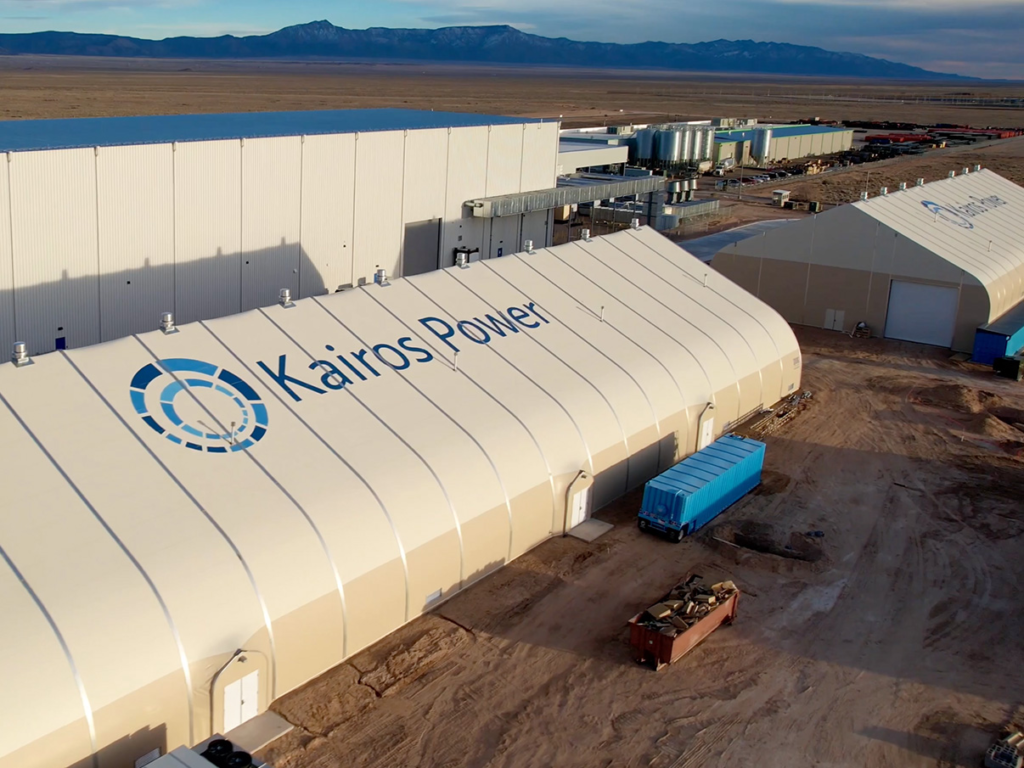
The filing itself is unremarkable on its face: Kairos Power’s Hermes 1 demonstration reactor got a 28-month extension, pushing completion from December 2026 to April 2029. Standard trade coverage treated it as a delay story, one more first-of-a-kind nuclear project slipping its timeline, filed and forgotten.
That reading misses the actual signal. The interesting event isn’t the delay. It’s what Google did in the exact same window the delay was filed: broke ground on Hermes 2, the commercial-scale follow-on, under a fleet-development agreement that was never contingent on Hermes 1 hitting its original date to begin with. A sophisticated capital allocator looked directly at a 28-month schedule slip on unproven Generation IV technology and increased its exposure, not decreased it. That is not what companies do when they’re worried about execution risk. It’s what they do when they’ve already priced that risk in and decided the underlying asset is worth holding through it.
The Structural Tell Everyone’s Missing
Here’s the detail that separates real insider read from headline-level coverage: Hermes 1 and Hermes 2 were never sequenced the way most people assume. Kairos didn’t structure the Google deal as “prove Hermes 1 works, then build Hermes 2.” Hermes 2 broke ground while Hermes 1 was still mid-construction, with lessons flowing from one build to the other in real time rather than in series. That’s a materially different risk architecture than the one that killed NuScale’s Idaho project, where the entire commercial case rested on one sequential, unforgiving timeline that a consortium of municipal utilities couldn’t absorb once costs moved.
Kairos built parallel, not sequential, dependency into its commercial structure from day one. A delay on the demonstration unit doesn’t stall the commercial unit behind it, because the commercial unit was never actually waiting on it. That’s not an accident of engineering convenience. It’s a financing decision, almost certainly one Google’s own risk team had a hand in shaping, because it’s exactly the structure a buyer with genuine long-horizon conviction would insist on before committing capital to a first-of-a-kind reactor technology.
What the Coolant Choice Actually Signals About Where Capital Is Headed
Kairos didn’t pick fluoride salt cooling, its KP-FHR design uses molten flibe salt rather than water or helium, because it’s easier. It’s harder to license, harder to build, and it was the first non-water-cooled reactor design approved for US construction in over fifty years. Companies don’t choose the harder regulatory path unless the payoff on the other side is structurally different from what the easier path offers.
The payoff here is thermal output suited to exactly the profile hyperscale data center operators need: compact footprint, high-temperature output, and a fuel and coolant architecture that doesn’t compete in the same lane as the light-water SMR field crowded with NuScale, BWRX-300, and a dozen others chasing the same utility-scale grid contracts. Kairos effectively opted out of the race everyone else is running. That’s worth sitting with: while the rest of the sector fights over who gets to utility-scale grid power first, Kairos built a reactor whose entire commercial thesis assumes grid power was never really the prize.
The Signal Inside the Signal
Most coverage of the delay asked whether Kairos would hit its dates. That’s the wrong question, and asking it is how you miss what actually matters here. The right question is whether Google’s continued, expanding commitment through a public schedule slip tells you something about how sophisticated buyers are underwriting first-of-a-kind nuclear risk right now, in 2026, with real capital, not press-release enthusiasm.
The answer embedded in Kairos’s filings is that at least one hyperscaler has concluded first-of-a-kind schedule risk in advanced nuclear is financeable, provided the commercial structure doesn’t force a single point of failure. That’s a genuinely different underwriting posture than the one that governed the SMR sector’s last major casualty in Idaho, and it’s the kind of structural detail that never shows up in a press release, only in what a sophisticated buyer actually does when the schedule slips.
Every capital allocator evaluating this sector should be asking the same structural question about every developer on their list: is the commercial architecture built so that a first-of-a-kind delay is absorbable, or does it sit on the same fragile, sequential dependency that has already ended one flagship SMR project. Kairos just showed you, in a filing almost nobody read closely, which side of that line its backer believes it’s on.
We track exactly this kind of commercial-architecture risk, not just headline milestones, across every major SMR and MMR developer in the SMR Market Intelligence Report 2027. This is the level of analysis the report is built on.