The SMR sector has moved past the concept stage. More than 80 SMR designs are at various stages of development worldwide. Design work is taking place in at least 20 countries and involves more than 40 developers, including established vendors, national laboratories and new nuclear companies. Two demonstration plants using SMRs are in commercial operation, six units are under construction, and dozens of designs are moving through regulatory review or pre-licensing for deployment around 2030 and beyond. One project is in a commissioning test, with a target of connecting to an electricity grid by the end of 2026. Several others are expected to reach commercial operation in the early 2030s.
For a business audience, this describes a market with a visible pipeline, a short operating record and many open commercial questions. Designs are numerous, but the economic competitiveness of most of them still has to be proven. This article covers where demand comes from, how projects get financed, which technology lines are closest to market, which deployment models are emerging and what developers, suppliers and investors should track.
The demand picture
Electricity demand is the base of the SMR case. Electricity consumption is projected to grow at an average annual rate of 2.2% between 2025 and 2060, which more than doubles it over that period. Global final energy consumption is expected to rise by about 20% over the same horizon, and the share of electricity in that consumption is projected to almost double by 2060. Most of the growth is being met by low-emission sources, with renewables and nuclear together accounting for a substantial share of recent additions to generation.
Nuclear power supplied 8.4% of global electricity in 2025. At the end of that year, 413 reactors were operating with a combined capacity of 377.1 GW(e), and 72 reactors with 77.2 GW(e) were under construction. A further 23 reactors with 19.7 GW(e) were in suspended operation. Two-thirds of current nuclear generating capacity has been running for 30 years or more, and 46% for more than 40 years. That age profile creates a steady need for new capacity and for lifetime extension work just to hold the current share.
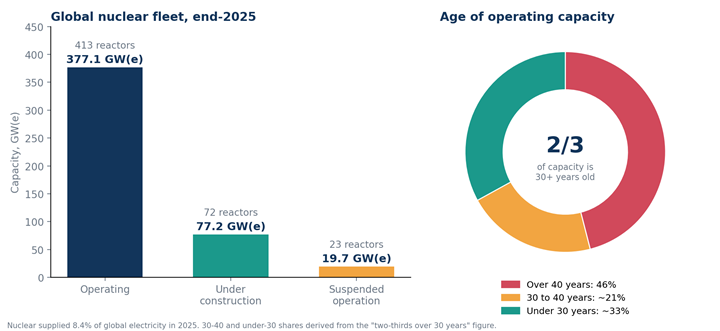
Figure 1: The global nuclear fleet at the end of 2025, and the age of operating capacity. Ageing plants create a steady need for new build and lifetime extension.
Policy targets add to the demand case. More than twenty countries launched a declaration to triple nuclear capacity by 2050, and thirteen more have joined since. More than 140 nuclear industry companies and sixteen major financial institutions have also expressed support for the goal. Long-term projections point to nuclear capacity more than tripling by 2060. SMRs are positioned to take a share of that growth, particularly in markets where large reactors are hard to fit.
Interest in SMRs is strongest in emerging markets and developing economies. Smaller electricity grids, limited investment capacity and the need to add firm, low-carbon power are the common drivers. Countries with established nuclear programmes are also looking at SMRs for power generation and for non-electric uses.
Where SMRs fit commercially
SMRs are defined here as reactors with capacities typically up to 300 MW(e). That unit size points to several market segments.
The first is smaller grids. A large reactor can be too big for a grid with limited demand or limited transmission capacity. A smaller unit can fit without major transmission upgrades, and it reduces the standby capacity and operating reserves the grid has to carry. SMRs are also designed to support load-following and flexible operation.
The second is replacement of ageing fossil-fired generation. The lower unit output makes it practical to replace coal or gas units at existing sites in some cases, where the grid connection and site infrastructure may already exist.
The third is industrial and off-grid supply. SMRs can supply heat as well as power. Applications include mining, process heat, seawater desalination, hydrogen production, and district heating and cooling. Remote locations and off-grid sites are also in scope. Cogeneration of electricity and heat can raise overall energy use and project revenue, which matters for financing.
The fourth is large energy users. Proposals for SMRs now name mines, remote communities, islands, data centres, desalination facilities, hydrogen plants, district heating systems and industrial sites as potential customers. These buyers can sign long-term energy purchase contracts, which gives a project a defined revenue stream.
The financing economics
Financing decides whether a nuclear project proceeds, and it is where SMRs aim to change the equation. Nuclear plants require investment before they produce any electricity, so their cost is sensitive to the terms on which capital is available. A one percentage point increase in the cost of capital can raise electricity generation costs by roughly 10%. Reducing financing costs and controlling construction costs are therefore central to project viability.
Large nuclear projects carry long development and construction phases, uncertainty about timelines and final costs, revenue risk in deregulated markets, long-term liabilities for decommissioning and spent fuel, and political and policy risk. In lower and middle income economies these risks are amplified by higher capital costs, limited access to long-term financing, lower sovereign credit ratings and greater exposure to inflation and currency movements. Domestic financial markets may also lack the depth to support multi-billion dollar projects.
SMRs offer four features that can improve financeability, according to current assessments:
- Lower initial capital cost. A smaller overall investment can open access to debt and equity from a broader range of sources. It can also reduce the number of financial institutions that need to be involved in a project.
- Shorter delivery time and reduced construction risk. Modular construction and factory-based manufacturing are expected to improve cost certainty, reduce delays and bring earlier revenue, which should lower financing costs.
- Revenue diversification. Designs that produce electricity, heat and services such as hydrogen or desalinated water can strengthen project economics and spread revenue risk.
- Staggered deployment. In a multi-module plant, early units generate revenue that can help finance later ones. This reduces borrowing needs and may lower perceived risk over time, although the benefit has to be weighed against potential cost increases from a longer project timeline.
Investors should note the limits. SMRs share many risks with large reactors, including construction, regulatory and market risk. They also share long lifetimes and relatively low, stable operating expenses. The cost per MW(e) is not necessarily lower than for a large light water reactor. Whether it ends up lower depends on whether modular construction, factory fabrication, standardization, off-the-shelf components and learning curve effects can offset the loss of economies of scale. The lower total project cost is the clearer advantage for now.
Risk mitigation tools and capital sources
Financial risk in a nuclear project is highest in the pre-construction and early construction stages, and it declines as the project approaches operation. Once a plant is in commercial operation, predictable cash flows cover operating costs and debt service. This shapes who invests and when. In early phases the investor pool is small and financing options are limited. After construction risk has been addressed, a wider group of institutional investors and long-term lenders becomes available, and refinancing at a lower cost of capital is possible.
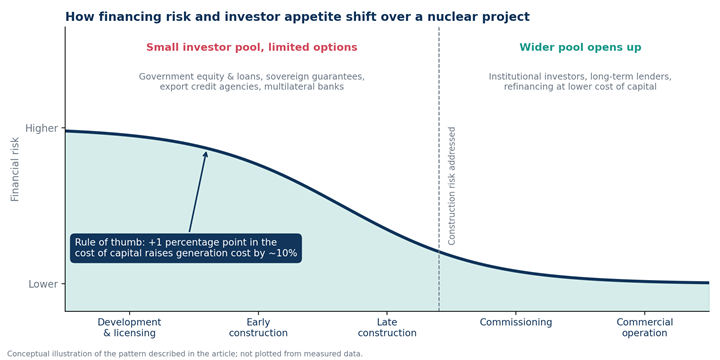
Figure 2: Financial risk peaks before and during early construction, then falls, widening the pool of available capital.
Several instruments are used to improve bankability:
- Government participation. Public financing has carried most nuclear development historically. Governments invest through equity stakes or debt financing, and they offer sovereign loan guarantees to lenders.
- Export credit agencies. These agencies support domestic companies working abroad through loans, guarantees and insurance. Their backing is critical in higher risk markets where private capital might otherwise be unavailable.
- Revenue stabilization. Long-term power purchase agreements, feed-in tariffs and contracts for difference provide fixed or predictable revenues over defined periods. Tax credits and premiums can supplement market revenues.
- Sustainable finance. The inclusion of nuclear energy in sustainable finance taxonomies has opened access to green bonds, green loans and ESG-focused funds. As of February 2026, more than USD 37 billion has been allocated to nuclear energy projects through these mechanisms.
- Multilateral development banks. The World Bank Group decided in 2025 to re-engage on financing nuclear energy and to partner with the nuclear sector’s international agency. Cooperation now extends to the Asian Development Bank, the European Bank for Reconstruction and Development, the OPEC Fund for International Development, the Inter-American Development Bank and the Development Bank of Latin America and the Caribbean. The scope varies by institution and covers energy planning, capacity building, institutional and regulatory development, technical assistance and consideration of project financing.
For SMR developers, the multilateral channel matters most in newcomer markets, where higher capital costs and thin institutional frameworks affect bankability. For investors, the growth of green finance volumes shows that capital is available for projects that meet eligibility requirements.
From first-of-a-kind to series production
The economics of SMRs depend on moving from high-cost first-of-a-kind projects to standardized series production. This is the central commercial challenge of the sector. It requires rethinking traditional supply chains for factory fabrication, and it requires secure financing for the production line as well as for the individual plant.
Experience from large reactor programmes shows what produces cost and schedule control. Successful programmes shared these factors:
- Standardized reactor designs
- A commitment to fleet or series construction
- Efficient and well-coordinated regulatory processes
- Established supply chains and skilled labour bases
- Willingness to absorb early-stage learning costs, including initial delays and overruns, until industrial maturity is reached
Each of these applies to SMRs. A commitment to fleet construction is a particular issue, because the factory approach only pays off with repeat orders. Standardization also adds supply chain complexity that has to be managed. Modularization improves the quality of fabricated components and the productivity of construction labour, but only if designs are standardized across units. Industry collaboration with policymakers and regulators on streamlined licensing is also needed. Harmonization of regulatory practice across jurisdictions supports effective, safe and secure deployment of SMRs and advanced reactors, and it reduces the cost of licensing the same design repeatedly.
For suppliers, these requirements point to opportunity in manufacturing capacity, component qualification, module transport and factory inspection. For developers, they mean that order books and repeat orders carry as much weight as the technical design.
Technology lines and commercial readiness
SMR designs are grouped into four technology lines, plus two deployment classes. Their commercial maturity differs significantly, and so does their risk profile for investors.
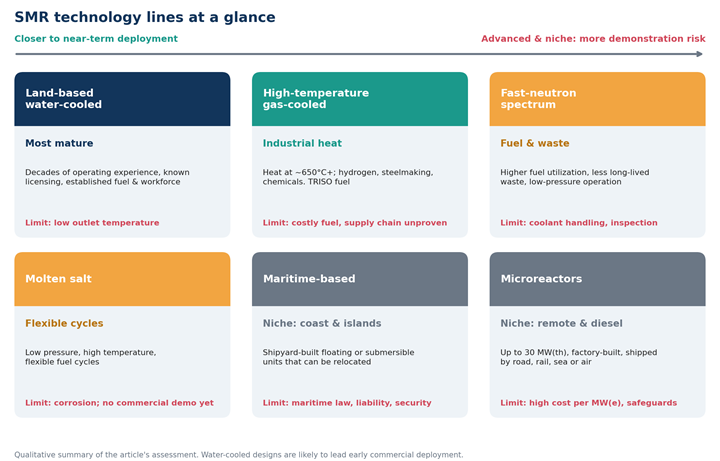
Figure 3: SMR technology lines, ordered from closest to near-term deployment to those with more demonstration risk.
Land-based water-cooled SMRs are the most mature category. They draw on decades of operating experience, established fuel cycle and supply chain infrastructure, a trained workforce and licensing frameworks that regulators already know. This combination offers the lowest technical and regulatory risk for near-term deployment. The main technical limit is a relatively low coolant outlet temperature, which constrains thermal efficiency and limits use in high-temperature industrial heat applications.
High-temperature gas-cooled reactors deliver heat at around 650°C or above. That supports high-efficiency electricity generation, cogeneration and industrial uses not available to water-cooled designs, including thermochemical hydrogen production, steelmaking and chemical synthesis. They use TRISO fuel, which withstands very high temperatures. The challenges are economic and industrial. TRISO fabrication is specialized and costly, the graphite inventory could complicate waste management, and demonstrated commercial performance and a mature fuel supply chain at scale are still to be established.
Fast-neutron spectrum SMRs use coolants such as sodium, lead, lead-bismuth or helium. Their main advantage is higher fuel utilization and the potential to reduce the volume and longevity of high-level waste. Liquid-metal variants operate near atmospheric pressure with high outlet temperatures. Challenges include sodium’s reactivity with air and water, difficult in-service inspection, and the tendency of lead and lead-bismuth to corrode steel and solidify at ambient temperature.
Molten salt SMRs use molten salt as coolant or as both fuel carrier and coolant. Potential advantages include low-pressure systems, high operating temperatures with high efficiency, and flexible fuel cycles. Salts can corrode alloy structures at high temperature, and a circulating fuel salt spreads radioactivity through the primary loop, which complicates maintenance, tritium control and safeguards. Materials still need to be determined, and a commercial demonstration remains to be established.
Maritime-based SMRs are designed for deployment at sea, either as floating units on barges or as submersible units. Units could be built and commissioned in a shipyard, delivered to site and relocated as demand changes. That can bring power to coastal communities, islands, ports and offshore industrial users without large grid investment. The main challenges relate to maritime law, liability, safeguards, marine corrosion, extreme weather, offshore security, decommissioning and emergency response. Regulatory and operational frameworks may need further adaptation and harmonization.
Microreactors are very small units, typically up to 30 MW(th). They target niche electricity and district heat markets in remote regions, mining operations, industrial sites and fishing communities that depend on diesel generators. A unit can be factory-built, shipped by road, rail, sea or air, and operated semi-autonomously for years between refuelling. That could displace costly diesel logistics. The issues are high cost per MW(e) at such small outputs, security and safeguards questions for remote operation with minimal staffing, and transport of fuelled units, which licensing frameworks have yet to address.
For a business reader, the sequencing is clear. Water-cooled designs will likely lead early commercial deployment. Higher-temperature and advanced designs offer access to industrial heat markets but carry more fuel supply and demonstration risk. Maritime and microreactor classes target specific niches where the alternative energy source is expensive.
Deployment and ownership models
How an SMR project is structured, owned, financed, supplied and operated is a commercial decision, and for newcomer countries it is also a strategic one. Traditional models for large plants rely on strong government involvement, intergovernmental agreements, export credit support and established vendors who handle engineering, procurement, construction, commissioning and operation. Government-owned utilities, build-own-operate structures, build-own-operate-transfer approaches and long-term power purchase agreements all remain relevant for SMRs. SMRs also allow more flexible options, and several are emerging.
Phased deployment. A country or developer starts with one or two modules and adds more as demand grows, financing becomes available and operating experience builds. This reduces initial capital at risk and lets early units earn revenue while later units are built.
Fleet-based deployment. A standardized design is deployed repeatedly across several sites or countries. This supports learning effects, repeat licensing, common spare parts, shared training programmes and a more predictable supply chain. In newcomer markets, regional or multi-country fleet approaches could support shared training centres, joint procurement, harmonized regulatory learning and common approaches to fuel supply and waste management.
Energy-service or heat-service models. The technology provider or project company, which can be a private entity, a consortium or a government, finances, owns, operates and maintains the reactor. The customer buys electricity, heat, steam or another energy service under a long-term contract. This model can reduce the burden on an embarking country to build all operating capabilities at the start. It raises open questions on the identity and competence of the licensee, emergency arrangements, liability, safeguards, security, spent fuel management, decommissioning and the long-term presence of the vendor or operator in the host country.
Joint ventures and strategic partnerships. Many SMR developers are young companies focused on design, licensing and demonstration. They may not yet have the capability to deliver manufacturing, construction, fuel supply, operations, maintenance and customer support at commercial scale. Partnerships with experienced utilities, engineering companies, fuel suppliers, industrial end users and host country organizations can combine technology with proven delivery capability. In newcomer markets these arrangements need to support technology transfer, workforce development, local industrial participation and domestic owner and operator competence.
The integrated support packages that buyers request are also changing. Beyond financing, fuel supply assurance, training and licensing support, SMR packages may need to cover modular construction, factory inspection, transport of modules, multimodule licensing, supply chain qualification, security, safeguards, emergency planning and integration of heat or power with industrial end users. Each element is a service line for companies in the supply chain.
One point applies to every model. Simplified project delivery does not reduce the host country’s obligations. The host state remains responsible for the legal and regulatory framework, independent regulatory oversight, safeguards and security commitments, waste and spent fuel planning and public trust. Deployment models can change how responsibilities are shared among participants, but they cannot transfer the state’s ultimate responsibilities under international legal instruments and safety standards. A model that leaves these questions unanswered will face delays in licensing and financing.
Newcomer markets and the procurement path
Outside countries with established programmes, approximately 43 countries have expressed interest in nuclear power and are structuring their programmes through a phased framework. Six have reached the stage of constructing a plant or signing construction contracts. Several have taken a policy decision and are preparing for contracting and construction. Twenty-eight are assessing the nuclear option, developing a national position and addressing the infrastructure issues required for a knowledgeable commitment. Others are exploring whether nuclear power belongs in their long-term strategies. Across many of these programmes, interest in SMRs is increasing, especially where grids are small, investment has to be phased or non-electric applications are attractive.
The framework covers 19 infrastructure issues, including funding and financing, legal framework, regulatory framework, electrical grid, human resource development, site and supporting facilities, nuclear fuel cycle, radioactive waste management, industrial involvement and procurement. Effective implementation normally needs a national programme implementing organization with authority to coordinate ministries, regulators, utilities and other stakeholders.
For vendors and developers, this has direct sales implications. The point at which a country becomes ready to invite bids or negotiate a contract for its first plant is a defined milestone, and it comes after the policy decision, the legal and regulatory framework, the financing and procurement strategy and the strengthening of national capabilities. Selling into a newcomer market therefore means engaging well before the tender. Suppliers who support grid studies, siting, workforce training, regulatory preparation and financing structures are working on the same issues that determine when a tender is issued.
Country examples show the range of approaches. One Latin American country in the early assessment stage has completed studies recommending SMRs of 200 to 400 MW by 2040 and has enacted a nuclear energy law. One European country with a large-scale programme also sees a second stream of investment from large energy and chemical companies that want to deploy SMRs commercially. Government treats the two streams as complementary and is preparing an SMR roadmap with guidelines for investors and the scope of government engagement. Another country at an advanced stage of its first plant is exploring SMR technologies with several partners and developing a legal framework to encourage private SMR investment and localization. These examples point to three features of the market: regulatory frameworks being written, private investors entering alongside public programmes and local industrial participation being a policy goal.
Business risks to weigh
Investors and suppliers should weigh several risks against the opportunity.
Technology maturity. Most SMR designs are still under development. The operating record is limited to a small number of plants, with more expected in the early 2030s. Performance data from those plants will inform cost and reliability assumptions across the sector.
Cost competitiveness. Lower project cost does not guarantee lower cost per MW(e). The sector needs standardization, repeat orders and learning curve gains to reach competitive economics.
Supply chain. Factory fabrication needs qualified suppliers, and fuel supply for several advanced designs is not yet established at scale. Standardization across units can add supply chain complexity if it is not managed.
Licensing. Licensing readiness varies by design and jurisdiction. Multimodule licensing, transport of fuelled units, emergency planning zones and offshore deployment all need regulatory development. Harmonization efforts can shorten timelines for repeat designs.
Institutional capacity. In newcomer markets, limited regulatory experience, small electricity markets and political or policy uncertainty increase risk premiums. Strong government involvement, international partnerships and multilateral support are common mitigants.
Business model clarity. Questions about licensee identity, liability, spent fuel and decommissioning under service-based models need resolution before large-scale financing is available for them.
Timeline risk. A staggered deployment approach lowers upfront capital, but a longer project timeline can add cost. Developers need to show the net effect in their financial models.
What to track over the next few years
Several indicators will show how quickly the sector moves from early delivery to scale.
- First grid connections and operating data. The commissioning test now under way, the six units in construction and the early 2030s commercial start dates will provide the first performance and cost evidence.
- Regulatory progress. The number of designs completing review, and the extent of harmonization across jurisdictions, will determine licensing timelines.
- Order books and fleet commitments. Repeat orders for standardized designs are the clearest signal that series production economics are working.
- Financing volumes. Growth in green finance allocations, multilateral bank participation and export credit support will show whether capital costs for SMR projects are falling.
- Newcomer milestones. Countries moving from assessment to contracting will create the next wave of tenders and partnership opportunities.
- Non-electric contracts. Long-term heat and power purchase agreements with mines, industrial sites, data centres and desalination operators will show demand beyond the grid.
- Supply chain build-out. Investment in modular fabrication capacity, fuel production and component qualification will indicate how soon projects can move beyond first-of-a-kind delivery.
SMRs address real constraints in the nuclear market: project size, upfront capital, construction risk and fit with small or remote grids. The early operating plants, the construction pipeline and the growing set of financing channels show that the sector is moving into delivery. The main commercial tests are still ahead. Developers have to demonstrate cost control and move to series production. Governments have to put legal, regulatory and institutional frameworks in place. Financiers have to price risk as operating data accumulates. Buyers and suppliers who understand how technology lines, deployment models and financing tools interact will be better placed to pick the right projects and partners.
Download the SMR Market Intelligence Report 2027
Business decisions in this sector depend on a clear view of where the opportunity is heading. The SMR Market Intelligence Report 2027 projects the business potential of the SMR industry in the coming months, so developers, suppliers, investors and advisers can plan with current market information.