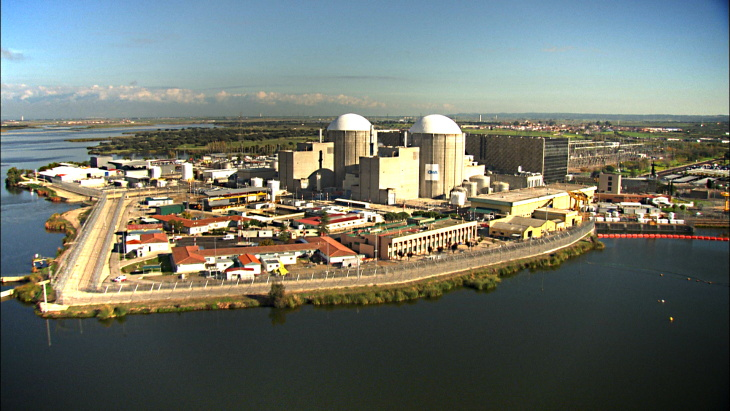
The Spanish government has officially granted a license renewal for the two-unit Almaraz nuclear power plant, extending its operations until June 2030.
Under Spain’s prior nuclear phase-out policy agreed upon in 2019, Unit 1 was originally scheduled to shut down in October 2027, with Unit 2 following in October 2028. However, following a formal request by plant operators (Centrales Nucleares Almaraz-Trillo) and a favorable safety review by the Nuclear Safety Council (CSN), the Ministry for Ecological Transition and the Demographic Challenge (MITECO) issued a ministerial order to postpone the closures.
The decision was driven by ongoing energy market volatility and supply uncertainties resulting from geopolitical conflicts in the Middle East and Ukraine. The government noted that the temporary, limited extension will help protect Spanish consumers from price spikes while structural investments in renewables and storage continue to scale. Despite this three-year reprieve for Almaraz, the administration maintained that its broader roadmap targeting the phase-out of the country’s remaining commercial nuclear fleet by 2035 remains officially unchanged.
Industry Perspective
The decision to extend the operational life of Almaraz highlights the growing friction between rigid political phase-out timelines and the practical realities of European energy security. For years, Spain’s nuclear operators and industry bodies like Foro Nuclear have pushed back against scheduled closures, arguing that shedding firm, low-carbon baseload generation prematurely increases consumer vulnerability to fossil fuel price shocks and undermines grid stability.
While the extension to 2030 is viewed as a welcome reprieve by the nuclear sector, it underscores a precarious middle ground: utilities must manage short-term asset life extensions under the shadow of a looming 2035 national deadline. For the broader European energy landscape, the move reflects a reluctant pragmatism where even governments committed to nuclear phase-outs are forced to lean on existing atomic infrastructure to weather international energy crises.