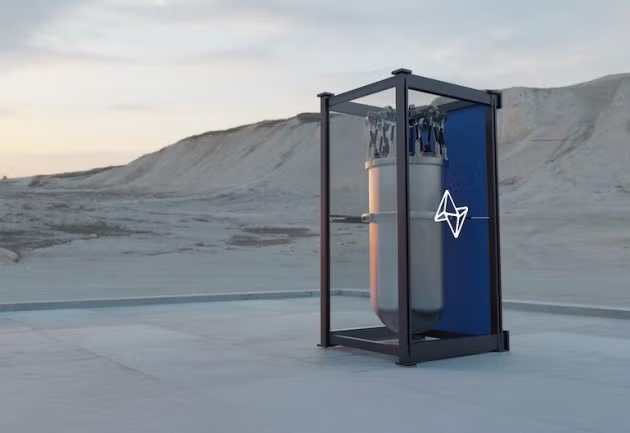
Ontario-based Nuclea Energy has signed a non-binding memorandum of understanding (MOU) with New Mining Co, a provider of high-density computing and Bitcoin mining services, to evaluate the feasibility of co-locating the “Morpheus” microreactor at data center facilities. The partnership aims to assess the potential for behind-the-meter power solutions, with a study focused on an initial 30 MWe requirement and a roadmap for expansion up to 100 MWe.
Under the agreement, the companies will conduct a two-phase technical analysis covering engineering scoping and site integration. While the MOU does not commit either party to a power purchase agreement, it serves as a formal framework for Nuclea to provide technical advisory services, including reactor specifications and regulatory strategy. Nuclea’s Morpheus design is a lead-cooled, graphite-moderated microreactor scalable from 3.5 MWe to 50 MWe, intended for applications requiring localized, reliable power.
Nuclea is currently in the conceptual design stage and is working toward an initial Regulatory Engagement Plan for the U.S. Nuclear Regulatory Commission (NRC). The firm is simultaneously pursuing a broader commercialization strategy, including a planned Nasdaq listing and potential demonstration testing at the Utah San Rafael Energy Laboratory.
Industry Perspective
The collaboration between Nuclea Energy and New Mining highlights an evolving strategy within the nuclear sector: shifting focus from traditional grid-scale power to highly specific, high-load industrial partners. As data centers and large-scale computing operations face increasing pressure to secure stable, carbon-free energy without relying on constrained public grids, the “behind-the-meter” deployment model is emerging as a critical commercial frontier. For the nuclear industry, these partnerships offer a template for creating dedicated, purpose-built energy markets that bypass traditional utility bottlenecks, suggesting that the path to nuclear growth may increasingly lie in serving the specialized demands of the digital economy.