The U.S. Department of Energy (DOE) has formally announced an expansion of its Advanced Reactor Demonstration Program (ARDP) cooperative agreement, committing up to an additional $1 billion to advanced reactor developer X-energy. Revealed during the company’s second-quarter 2026 earnings call, the latest federal tranche brings the total potential DOE cost-share commitment to approximately $2.115 billion.
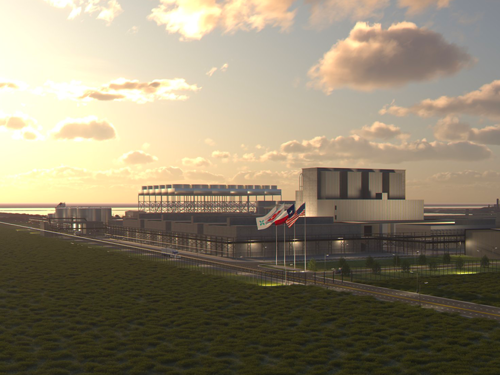
The substantial capital injection is earmarked to accelerate key milestones across X-energy’s portfolio, most notably the landmark deployment of its Xe-100 high-temperature gas-cooled reactor at Dow Inc.’s UCC Seadrift Operations facility in coastal Texas, alongside the build-out of the TX-1 TRISO fuel fabrication infrastructure.
The Seadrift project is designed to integrate a four-unit, 320 MWe advanced nuclear plant directly behind-the-meter to supply zero-carbon electricity and high-temperature process steam to Dow’s chemical manufacturing operations, substituting aging fossil-fuel systems with firm, clean thermal energy. This expansion builds on a period of intense operational momentum for X-energy following its public market debut on the NASDAQ earlier this year, which generated approximately $1.1 billion in net proceeds and left the company with nearly $1.9 billion in total liquidity and zero debt as of June 30, 2026.
The decision by the DOE to scale its financial commitment to over $2.1 billion highlights a profound shift in how federal and industrial stakeholders are approaching first-of-a-kind (FOAK) advanced nuclear deployment. Transitioning high-temperature gas reactors from concept to commercial reality requires overcoming immense capital expenditure hurdles and supply-chain constraints. By deeply coupling federal cost-sharing with major industrial off-takers like Dow, the initiative provides a blueprint for decarbonizing heavy manufacturing while de-risking commercial scalability. For the broader nuclear business sector, this level of sustained public-private alignment signals that advanced modular reactors are increasingly viewed not just as alternative power generators, but as indispensable industrial assets capable of securing the future energy-intensive economy.