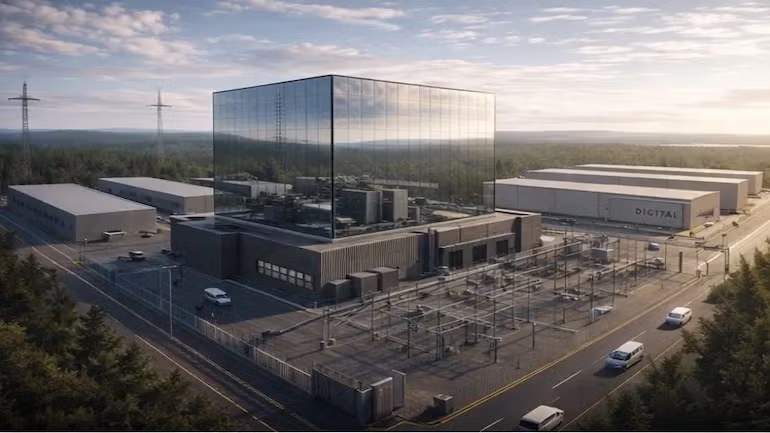
Toronto-based Thorium Atomics has officially commenced pre-application regulatory engagement with the U.S. Nuclear Regulatory Commission (NRC) for its Tesseract thermal gas-cooled reactor (TGR). The company is navigating the process under 10 CFR Part 53, a modernized regulatory framework designed to accommodate advanced reactor designs without the constraints of legacy light-water reactor assumptions.
The Tesseract is a 100 MWe helium-cooled, pebble-bed reactor engineered to deliver 750°C industrial process heat alongside dispatchable electricity. Beyond its mechanical design, the reactor features a thorium-232 breeding blanket intended to reduce lifetime mined-uranium requirements by roughly 50% compared to traditional Generation II reactors. Notably, the design utilizes TRISO fuel enriched to under 10%, a strategic choice to circumvent the supply chain constraints currently surrounding High-Assay Low-Enriched Uranium (HALEU).
In tandem with its regulatory efforts, Thorium Atomics has applied to Idaho National Laboratory’s (INL) Nuclear Energy Launch Pad program. This initiative will provide the company with access to federal infrastructure for independent reactor-physics verification—a critical step in validating the Tesseract’s unique thorium-breeding cycle and overall performance mathematics.
Industry Perspective
The progression of the Tesseract project represents a quiet but significant shift in the nuclear energy landscape. By focusing on sub-10% enrichment and integrating thorium-breeding, the design addresses two of the most persistent headwinds facing the sector: the precarious HALEU supply chain and the long-term sustainability of fuel resources. As the industry looks toward decarbonizing high-heat industrial processes, the ability of developers to move beyond traditional fuel cycles while securing a predictable path through modern regulatory frameworks may well define the commercial viability of the next generation of nuclear business.